
Legora vs Harvey: The High-Stakes Battle to Own Legal AI
Legora, a legal AI startup, has reached a $5.6 billion valuation following new investment, including backing from Nvidia’s venture arm. The company focuses on automating legal workflows such as research, drafting, and contract analysis for law firms.
The development highlights increasing competition in the legal AI space, particularly with U.S.-based Harvey, as both companies scale rapidly and expand their customer base. The category is seeing strong adoption from law firms due to clear efficiency gains and measurable return on investment.
The broader trend indicates that legal services are becoming a commercially viable and high-growth application area for AI, with a small number of players emerging as category leaders.
https://techcrunch.com/2026/04/30/legal-ai-startup-legora-hits-5-6-valuation-and-its-battle-with-harvey-just-got-hotter/
U.S. investors dominate Europe’s private-led space scale-up rounds
Five of the nine scale-up rounds the think tank tracked in 2025 were led by European public entities, such as the European Union’s investment arm or the British government.
https://spacenews.com/u-s-investors-dominate-europes-private-led-space-scale-up-rounds/
Counterpart Raises $50 Million Series C to Tackle AI-Era Business Risks
Los Angeles-based insurtech startup Counterpart has secured $50 million in Series C funding, reinforcing strong investor confidence in AI-driven insurance solutions tailored for modern business risks. The round brings the company’s total funding to approximately $106 million.
The funding round was led by Valor Equity Partners, with continued participation from existing investor Vy Capital.
Founded by Tanner Hackett, Counterpart is building what it calls “Agentic Insurance” a model that combines AI with deep underwriting expertise to help businesses manage risks related to hiring, operations, and AI usage. As companies increasingly adopt AI tools, they are also facing rising legal and compliance risks, particularly around hiring practices and automated decision-making.
Counterpart’s platform leverages data and machine learning to improve underwriting accuracy, speed up claims processing, and deliver better outcomes compared to traditional insurance systems. The company has already processed over 250,000 applications and issued more than 35,000 policies, demonstrating strong market traction.
The newly raised capital will be used to launch new specialty insurance products, expand risk management capabilities, and strengthen its insurance infrastructure. This includes capitalizing its own insurance entity to retain more risk and align incentives across the value chain.
As AI adoption accelerates globally, Counterpart is positioning itself at the intersection of insurtech, AI, and enterprise risk management, a category expected to grow significantly in the coming years.
General Analysis Raises $10 Million Seed Round to Build Security Infrastructure for Agentic AI
San Francisco-based AI infrastructure startup General Analysis has secured $10 million in Seed funding to develop security infrastructure for the emerging wave of agentic AI systems. The round highlights growing investor focus on safeguarding autonomous AI agents as they become more integrated into enterprise workflows.
The funding round was led by Altos Ventures, with participation from 645 Ventures, Menlo Ventures, Y Combinator, and other investors. This strong syndicate reflects rising demand for foundational AI security layers as companies deploy increasingly autonomous systems.
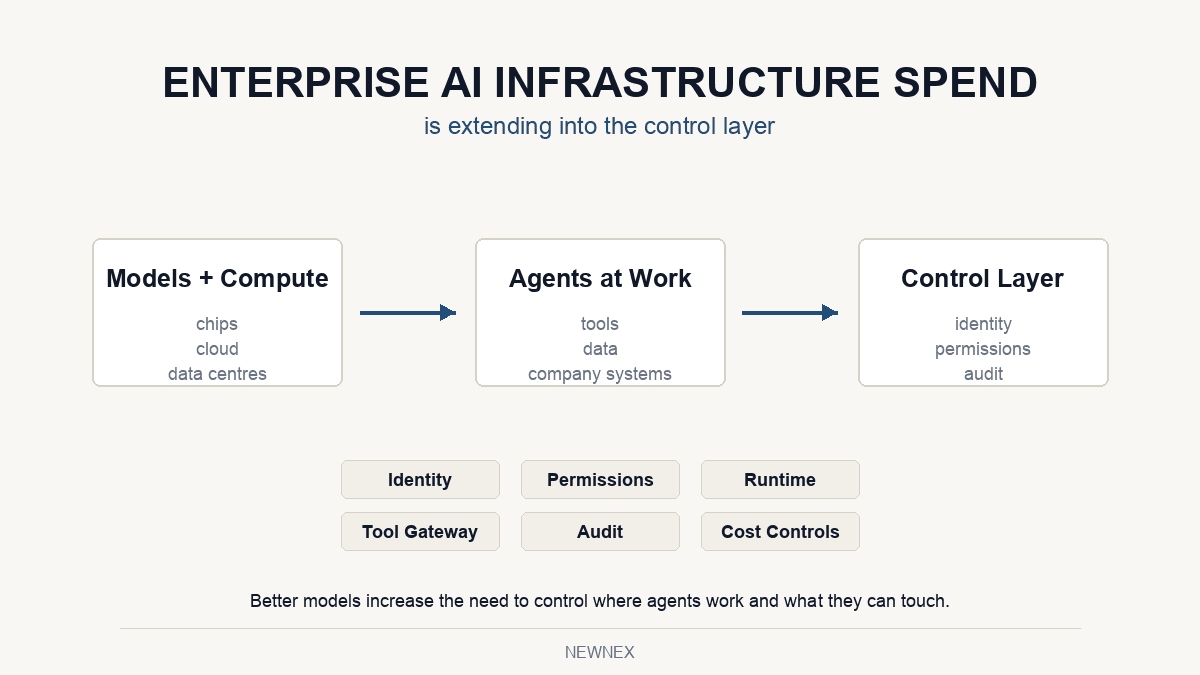
General Analysis is building infrastructure designed to monitor, secure, and govern agentic AI systems- software agents capable of making decisions and executing tasks independently. As enterprises move from passive AI tools to autonomous agents, the need for security, control, and auditability becomes critical.
The company operates in a rapidly emerging category at the intersection of AI infrastructure, cybersecurity, and enterprise software, where startups are building the guardrails needed for safe AI deployment. This includes ensuring that AI agents behave as intended, avoid unintended actions, and comply with organizational and regulatory requirements.
The fresh capital will likely be used to expand engineering capabilities, enhance product development, and support early enterprise adoption. As agentic AI becomes more widespread, infrastructure startups like General Analysis are expected to play a key role in enabling safe and scalable deployment.
Netomi Raises $110 Million Series C to Scale AI Customer Service Platform
San Francisco-based AI startup Netomi has secured $110 million in Series C funding, reinforcing strong investor confidence in AI-driven customer experience platforms. The round was led by Accenture Ventures, as enterprises increasingly adopt AI to automate and enhance customer service operations.
Founded by Puneet Mehta, Netomi builds AI systems that help enterprises handle customer interactions across chat, email, and voice channels. Its platform is already used by major global brands such as United Airlines, Delta Air Lines, Paramount, and DraftKings to manage complex customer queries with minimal human intervention.
The round also saw participation from Adobe Ventures and WndrCo, among others. As part of the investment, Jeffrey Katzenberg (WndrCo) joined the company’s board, while Accenture announced a strategic partnership to deploy Netomi’s AI solutions across its enterprise client base.
Netomi leverages large language models from leading AI providers such as OpenAI, Google, and Anthropic to deliver more advanced and contextual customer interactions. This allows businesses to move beyond simple chatbot automation toward handling medium to high complexity queries in real time.
The company plans to use the fresh capital to expand R&D, enterprise deployments, and AI agent capabilities, with a long-term vision of building proactive AI systems that can anticipate and resolve customer issues before they arise.
With global enterprises prioritizing cost efficiency and customer experience simultaneously, Netomi’s funding highlights a major shift toward AI-first customer service infrastructure as a core enterprise software category.
Ctruh Raises $2.5 Million Seed Funding to Build Spatial Internet Infrastructure
Bengaluru-based deep-tech startup Ctruh has secured $2.5 million in Seed funding to accelerate the development of its browser-native 3D and AI platform. The round highlights growing investor interest in companies building infrastructure for the spatial internet a future where immersive digital experiences run directly on the web without heavy hardware dependencies.
The funding round was led by Inflection Point Ventures, with participation from Avinya Ventures, India Accelerator, Founder’s Avenue, Anthill Ventures, and LVX, along with angel investors Vivek Sinha and Shivakumar Ganesan.
Founded by Vinay Agastya, Ctruh is building a proprietary browser-native 3D engine combined with its generative AI engine VersaAI, enabling businesses to create immersive XR experiences without requiring downloads or specialized hardware. The company aims to make 3D content creation scalable, accessible, and cost-efficient for enterprises.
A key product in its ecosystem is Commverse Studio, an AI-powered XR commerce platform that allows brands to deploy 3D experiences in under 30 minutes. This significantly reduces the complexity and time traditionally required for immersive content deployment.
The newly raised capital will be used to strengthen R&D, enhance product capabilities, and expand go-to-market efforts, particularly in the United States and UAE. With the global XR market projected to grow significantly, Ctruh is positioning itself as a foundational layer for next-generation digital experiences.
The startup has also gained recognition through platforms like Shark Tank India, ELEVATE 2025, and the Aegis Graham Bell Award, reinforcing its credibility in India’s deep-tech ecosystem.
As immersive technologies gain traction across e-commerce, retail, and enterprise applications, Ctruh’s funding round signals strong momentum in India’s emerging spatial computing landscape.